
Key Takeaways
Skydive Bend welcomes tandem skydivers up to 250 lbs, with a surcharge for guests over 200 lbs to help account for additional gear and operational considerations. Weight limits in skydiving exist strictly for safety reasons. Guests who are close to the limit should communicate honestly during booking, as factors like body proportions and instructor availability can affect jump eligibility. Skydive Bend aims to create a respectful and welcoming experience so more people can safely enjoy the unforgettable experience of skydiving over Central Oregon.
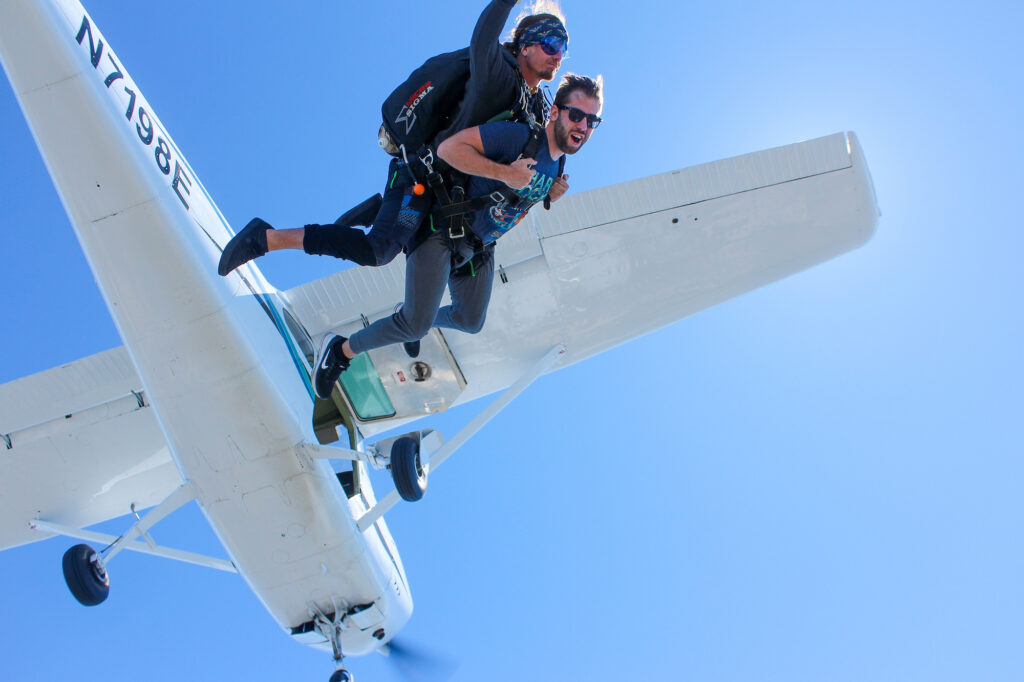
Is there a weight limit for skydiving? Yes. Dropzones worldwide enforce weight restrictions for skydiving. At Skydive Bend, our weight limit for tandem guests is 250 lbs, with a surcharge of $1 per pound over 200 lbs.
Many people searching for skydiving weight limit information are simply trying to figure out whether they qualify before booking. But, we want to also give some insight into why weight limits have to exist in the skydiving community. It’s not arbitrary – it’s a legal mandate! Let’s get into it.
Skydive Bend’s Weight Limit For Tandem Skydiving
The weight requirements for skydiving tandem at Skydive Bend are broken down below:
- Maximum guest weight: 250 lbs
- Guests over 200lbs pay a $1/lb surcharge
- Weight must be provided honestly during booking
- Weight must include clothes and shoes
- All guests are weighed at check in
The weight limit for parachute jumps can vary by dropzone. Some skydiving centers cap tandem jumper weights at 220 lbs, while others can accommodate heavier guests. It all depends on the dropzone’s equipment and instructors on staff.
Why Do Skydiving Weight Limits Exist?
But why is there a weight limit for parachuting? It’s a fair question, and one we hear all the time. The short answer is that skydiving weight policies are strictly based on safety.
Every parachute system includes a maximum operating weight as approved by the Federal Aviation Administration (FAA). For a tandem parachute, that weight must include the instructor, student, and gear.
Exceeding the stated limit means operating the equipment outside of its proven safety parameters. Consequences of doing so can include (but are not limited to):
- Faster fall rates during freefall
- Different canopy flight characteristics, including when landing
- Restricted instructor movement
- Equipment strain
This is also why many dropzones charge additional fees above a certain weight threshold. The surcharge helps account for additional wear on gear and operational considerations for the instructor.
What If You’re Close To The Limit?
If you’re near the 250 lb cutoff, don’t panic, just communicate honestly when booking!
Remember, skydivers love skydiving and want to share the sport with as many people as possible. We are never coming from a position of judgment, but rather wanting to get you in the sky, while keeping safety top priority for everyone involved.
In many cases, the height-to-weight ratio factors into whether a jump is possible on a given day. Someone who is athletic and proportionate at 245 lbs may be easier to accommodate than someone shorter with a different weight distribution.
Remember to:
- Provide accurate information
- Call ahead if you have questions
- Avoid guessing or underreporting your weight
Preparing for your first jump can be nerve-wracking! The weight limit is there to ensure safety is first, not to make you feel more anxious than you already do.
What Happens At Check-In?
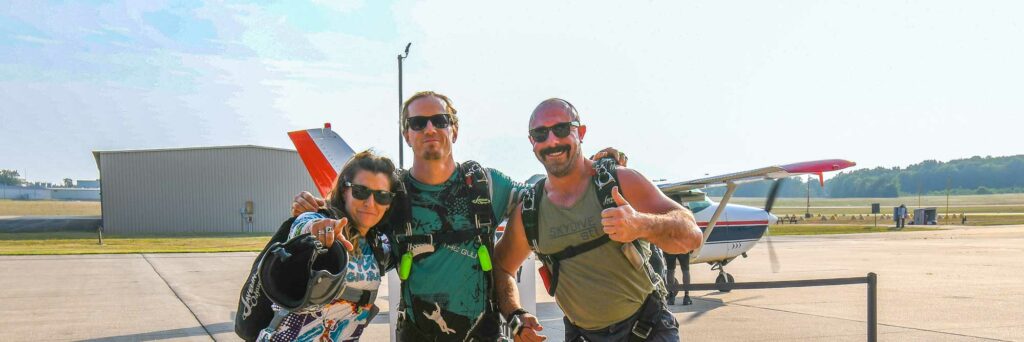
Most first-time jumpers are nervous about weigh-ins, but the process is quick and low-pressure.
At check-in, guests are weighed to confirm they fall within operational limits. This is standard practice across the skydiving industry and helps instructors make final safety decisions for the day’s conditions.
If you’re worried about the experience feeling awkward or judgmental, don’t be – we know, this can be easier said than done. Questions about tandem jump weight limit policies are extremely common, especially among first-time skydivers, so feel free to ask away during this time. Our team handles these conversations professionally and respectfully because the goal is always safety first.
Can Plus-Size People Skydive?
Absolutely. One of the biggest misconceptions around skydiving is that it’s only for a particular body type. In reality, many plus-size guests successfully complete tandem jumps and many go on to become licensed, solo skydivers.
The key is simply staying within the operational safety limits established by gear manufacturers and by the dropzone. At Skydive Bend, the approach is practical and welcoming: clear policies, honest communication, and no embarrassment.
Do Heavier Skydivers Fall Faster?
Technically, yes! In freefall, heavier bodies generally fall slightly faster because of increased mass and therefore, increased momentum.
Tandem skydivers use something called a drogue to account for the increase in body mass when there are two jumpers falling together. Drogues are used to control the fall rate by slowing it down to a manageable speed, and to help maintain stability in freefall. They also aid in deploying the main parachute.
Can you be too heavy for a parachute? Also, yes. Parachutes are made of nylon and super strong suspension lines, and they’re only rated to hold a certain amount of weight and pressure.
Note: Although we don’t have a learn to skydive program at Skydive Bend, it’s worth mentioning that solo skydiving rigs are not equipped with a drogue, and therefore fall rate is controlled by clothing (drag) and body positioning. This is why restrictions surrounding weight differ for solo training students and tandem skydivers.
Don’t Hesitate, Reach Out Today!
The combination of mountain scenery, high desert vibes, and adrenaline makes skydiving one of the most unforgettable adventures in Oregon.
If you’re ready, book your jump today! And if you still have questions about skydiving weight limit policies or aren’t sure if you qualify, reach out to us. The Skydive Bend team is happy to talk and answer questions. Remember, we love skydiving and want to share it – we will do everything we can to get you safely in the sky.